

Dr. Christine-Maria Horejs
Christine has an MSci and PhD in nanobiotechnology from the University of Natural Resources and Life Sciences, Vienna, Austria. She did her postdoc in the lab of Molly Stevens at Imperial College London, UK, and conducted research at the Karolinska Institute, Sweden. Christine then started at Springer Nature in 2017 as an Editor for Nature Reviews Materials. From July 2019, she moved to be a Senior Editor at Nature Nanotechnology, and in January 2021, she became Chief Editor of Nature Reviews Materials. Since January 2022, she has been Chief Editor of Nature Reviews Bioengineering. Christine is based in Berlin, Germany.

Dr. Dandan Gao
Our research program tackles global challenges in sustainability through an integrated strategy that spans (i) functional nanomaterials design and synthesis, (ii) electrocatalysis for sustainable chemistry, (iii) structure–property correlations for mechanistic studies and (iv) process scale-up in electrochemical flow reactors
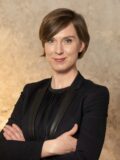
Dr. Gesine Born
Gesine Born initially studied chemistry, followed by communication design with a specialization in photography, in Hamburg. Early on, she developed an interest in portrait photography and the question of how images render knowledge and societal concepts visible. In 2006, she completed her studies under Ute Mahler with a thesis examining utopian housing concepts of the 1960s. Since 2010, she has worked as a science communicator, focusing on visual representation within the sciences. As a member of the Siggener Kreis, she developed guidelines for the use of images as well as the "Bildreflektor" tool. A fellowship with the Kiel Science Communication Network gave rise to the project "Versäumte Bilder" (Missed Images), which uses AI-generated portraits to bring forgotten female scientists into the public eye, thereby raising questions regarding memory, exclusion, and the power of images. Alongside her AI-related projects, she serves on the image editorial team for WZB-Mitteilungen, acts as a juror for the Jugendfotopreis (Youth Photography Prize), and is a member of the AI Task Force at the BMBF. This convergence of networking, innovative visualization, and image ethics ultimately led to the founding of the Bilderinstitut.

Prof. Dr. Jannika Lauth
Eberhard Karls UNiversity Tübingen
The research of Jannika Lauth focuses on the synthesis and characterization of ultrathin colloidal 2D semiconductors for optoelectronic applications. Using wet-chemical methods, her group produces mono- and few-layer nanosheets with tunable properties arising from quantum confinement. These materials exhibit strong excitonic effects and efficient charge carrier dynamics, making them suitable for devices such as LEDs, photodetectors, and solar cells. The group also develops colloidal 2D semiconductor inks that can be processed easily onto different surfaces, substrates and cover a broad spectral range from UV–Vis to NIR/SWIR. Their work is complemented by ultrafast transient absorption spectroscopy to study charge carrier dynamics and optoelectronic properties in real time.
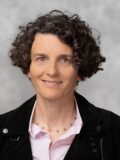
Prof. Katarzyna Pernal
Prof. Katarzyna Pernal's research focuses on developing advanced quantum and computational chemistry methods to accurately describe electron correlation in complex molecular systems. She is particularly interested in novel theoretical frameworks that combine wavefunction-based approaches with density functional theory.
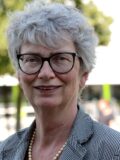
Prof. Dr. Katharina Kohse-Höinghaus
Prof. Dr. Katharina Kohse-Höinghaus is an internationally recognized expert in combustion chemistry and diagnostics. Her current research interest focuses on carbon neutrality, including especially alternative fuels and defossilized processes.

Prof. Dr. Melanie Schnell
Melanie Schnell leads the Spectroscopy of Molecular Processes group at DESY and is Professor of Physical Chemistry at Kiel University. Her main research activities concentrate on better understanding chemical processes on the molecular level, which will then lead to the ability to control and even manipulate them. To reach these goals, her group develops novel spectroscopic methods, especially in the area of rotational spectroscopy. The researchers focus in particular on broadband rotational spectroscopy using chirped microwave pulses, which enable new spectroscopy applications in structure determination as well as studies of molecular dynamics. With a novel extension of rotational spectroscopy, the enantiomers of chiral molecules can be differentiated and complex mixtures of chiral molecules can be analysed. One aim of these research activities is to separate chiral molecules, for example to exploit them for precision measurements.

Dr. Soni Deshwal
Dr. Soni Deshwal is passionate about the basic questions in mitochondrial biology. Currently, she is leading a group at Helmholtz-Munich, funded by an ERC Starting Grant. Her research focuses on the metabolic plasticity of mitochondria, particularly in relation to stress responses and cell death. Soni gained extensive mitochondrial expertise during her postdoctoral work at the Max-Planck Institute for Biology of Ageing and during her PhD at the University of Padova. She became particularly interested in ferroptosis during her postdoc, where she discovered that mitochondria can inhibit ferroptosis by transporting a lipid molecule, CoQ, to the plasma membrane. Her work aims to understand how mitochondria adapt to cellular stress and how their metabolic flexibility can be leveraged to combat diseases like neurodegeneration and mitochondrial disorders.
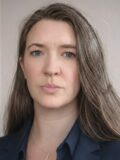
Prof. Dr. Swetlana Schauermann
Prof. Schauermann’s research focuses on atomistic-level understanding of heterogeneously catalysed reactions occurring on a variety of well-defined model surfaces, including nanostructured model catalysis, oxide-based materials and interfaces functionalized with organic ligands, both under ultra-high vacuum and ambient pressure conditions. She addresses the mechanistic aspects of heterogeneously catalysed reactions employing spectroscopic, microscopic and molecular beam techniques as well as single crystal adsorption calorimetry.
FAU Speakers
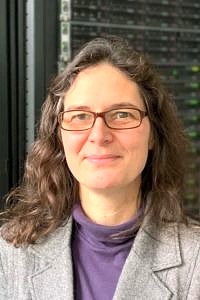
Prof. Dr. Petra Imhof
Professorship for Computational Chemistry
Professors
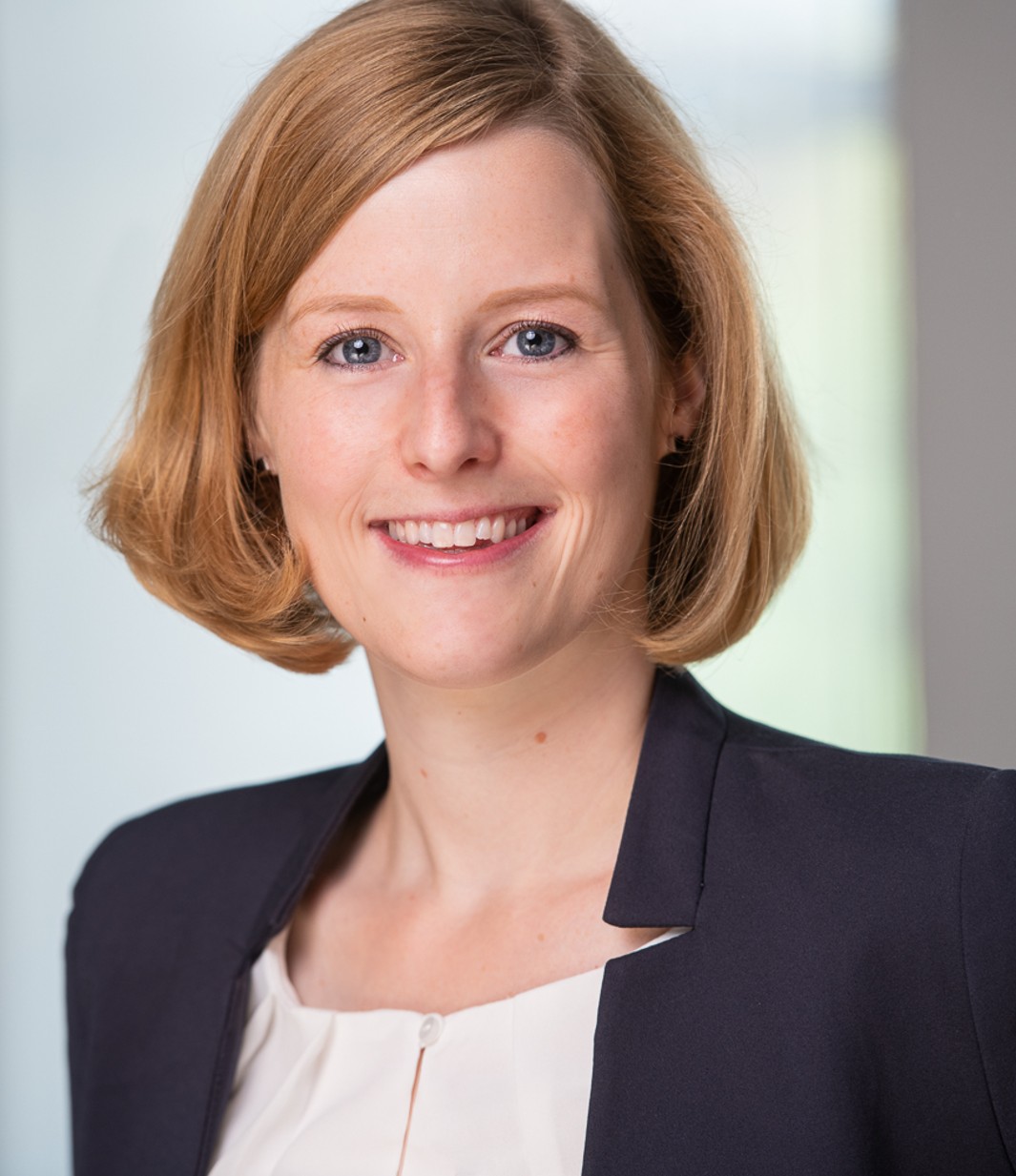
Dr. Dorothea Wisser
Chair of Catalysis and Sustainable Processes
Research associates